Return to MadridMan.com

 
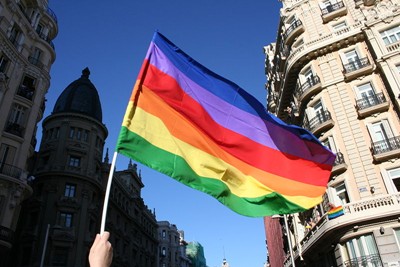
"Orgullo Gay Madrid 2009" has begun!

orgullo-gay-bandera-madrid-gay-pride-flag.jpg
Last year, Madrid hosted Europe's Orgullo Gay festival. This year is a more typical year with the somewhat smaller-scale Gran Vía parade and Chueca-wide street parties from 25 June to 5 July 2009. While last year's attendance was HUGE, inviting supporters and partiers throughout Europe, the novice won't see much difference this year because Madrid's Gay Pride Festival is big.

While I, MadridMan, am not gay, I do respect the rights of others to do pretty much whatever they want if not harming others - and I always enjoy a good party. One would have to be in deep denial if they couldn't see that Gay Pride is one BIG party and a lot of fun! I've never seen a bigger, better party for everyone; gays, straights, and anyone who likes to enjoy life - and see some things you aren't likely to see on a typical day on the streets in Madrid (or anywhere!). You can see the true joy in people's faces, everyone smiling, everyone laughing, everyone hugging (and possibly kissing), whistling, hand-holding and @$$-grabbing goes on too.

orgullo-gay-madrid-2009-bandera.jpgFestivities and shows begin on June 25th but the big Gay Pride Parade takes place on July 4th (how dare they schedule such a thing on USA's Independence Day!! (tongue-in-cheek)

The news these days about Madrid's Gay Pride festival is that next year's festival location may take place OUTSIDE the city of Madrid, far away from its home of the "Gay Neighborhood" of Chueca. It's hard to imagine the Gay Pride festival in, say, the suburbs of Parla or Pinto - although those places would be more than happy to have the economic inversion, I'm sure - but people would then have to take trains and cars to get there. This is not conducive to a "central" festival. But many of those who live in the Chueca neighborhood have filed complaints about the noise during the Orgullo Gay festival so the city was to take action. Yesterday, the "Orgullo Gay Organization" did not agree to the terms and says Orgullo Gay will stay in Chueca.

I think I've attended 3 Orgullo Gay Parades here in Madrid since moving here 4 years ago. They're all fun, they're all HOT, and there are always A LOT OF PEOPLE, both gay and non-gays, in attendance. In my opinion, there are a number of PROS & a number of CONS to the parade and festival in general. Here are mine:

PROS:
  • a great opportunity to remind people that homosexuality exists and should not be feared
  • a day for gays to "come out"
  • a day to tolerate and/or support alternative lifestyles
  • a day & place to be OPEN about being gay with other gays
  • a day to feel more accepted by your peers
  • to remind people that you don't have to be gay to be "gay friendly" (or "gay tolerant")
  • some incredibly colorful outfits
  • a day which can be very romantic because there's so much "love" in the air
  • free condoms are available everywhere

CONS:
  • the festival is always HOT in temperature
  • lots of sweaty bodies rubbing past you in the crowd
  • few or no public toilets - those available have long lines
  • some people pee in the street or between cars
  • bars in Chueca close their doors at night & serve drinks on the street (no toilets)
  • trash is everywhere and garbage collection insufficient
  • noise is unbearable for many Chueca residents throughout the festival
  • long hours waiting for the more "colorful" parade floats/buses/presentations

You may laugh, you may shake your head, or you may join in. But one thing's for sure; Orgullo Gay Madrid - Gay Pride 2009 is a lot of fun, a true spectacle which should be witnessed firsthand.

Useful Links:
http://www.madridgaypride.com/
http://www.gaypridemadrid.com/
http://www.madoweb.com/
http://www.chueca.com/
http://en.wikipedia.org/wiki/Chueca
 
pez-de-cristal-cercanias-puerta-del-sol-madrid-2009.jpg
Today, on its first day of operation, I made my maiden-visit to the brand-new Cercanías station in Madrid's Puerta del Sol. The controversial entryway is in the shape, it is said, of a "Glass Fish" or "Pez de Cristal", and does pose a striking structure in the otherwise traditional space of the plaza.

Thousands of people were onhand today, probably not so many to actually ride the cercanias train as they were taking photos and walking about to see their new landmark. Countless media outlets were stringing cable, conducting on-camera interviews, and recording the event for their own television stations.

entrance-pez-de-cristal-cercanias-puerta-del-sol-madrid-2009.JPGOne could go down the escalators as far as the common area but all the good stuff, it seemed, was on the other side of the electronic turnstiles - so I didn't go in. From the public area I could see the brand new LED screens, shiny automated ticket machines, and, from a distance, the behind-glass-remains of the Iglesia del Buen Suceso on the other side and down one level from the ticket turnstiles. There's surprisingly little to see in the common area and so to appreciate "The World's Largest ManMade Underground Cavern" one must buy a ticket and pass through.

Everything was clean, new, and wonderfully modern. I have to wonder how long the exterior will be free of graffiti, though.

puerta-del-sol-construction-madrid-2009-june-28.jpgAlot had been said about this completing nearly 5 or 6 years of construction on the Puerta del Sol - but that wasn't evident today where possibly only 15% of the entire place was open to pedestrians. The other 85% was closed off by barricades and fenses, construction materials and machinery scattered about. I, like a lot of people, I'm sure, expected to not only find a new cercanias station but also a completed Puerta del Sol free of construction. That was a disappointment.

It seems, at least at first look, that most of which remains is the placement of paving stones but some barricaded areas lead one to believe that some work is yet to be done in Kilometro 0. We'll wait and see but once it's done, we'll all be happy.
 
fernando-torres-spain-loses-to-usa-2009.jpgThe USA National Soccer Team, never (ever!) known as Giant Killers, came a step closer to earning the title for the first time.

Last night, USA stunned Spain in the soccer semifinal of the Confederations Cup in South Africa, a game everyone thought would be an easy win for Spain - the European Champion. Final Score: 2-0. The first goal was scored in the first half by Jozy Altidore. The second goal, much more spectacular, was scored in the second half by Clint Dempsey near the net and through the legs of ex-Atlético de Madrid star (and Madrid-born) Fernando Torres and past forever-National-team-goalie and team captain Iker Casillas.

Spain will play Sunday for a third-place medal while the USA will also play Sunday in the Final against Brazil, last year's Champion.

You have to wonder if Spain was overconfident with history, numerous recent wins, and top-shelf players running the grass with all opponents, possibly underestimating an admittedly embattled USA team in the Confederations Cup if not also in world reputation.

After reading through many articles and accompanying comments by Spaniards, one thing seems clear; first, Spaniards are very congratulatory to the American Team for what they've accomplished. A second thing is clear, Spain WAS overconfident and NO ONE was expecting much resistance by the lowly American team. Apparently, everyone was already talking about the Spain-Brazil final, bypassing the remote possibility of a win by the USA. This is what happens in sport; it's when you don't give due respect to your opponent that they rise up and bite you in the rear. I've seen this countless times in University Football games in the USA.

Interesting Spanish titles of articles written for this morning's publication include (translated into English):

  • "Disaster: Made in the USA"
  • "Spain Is Human Too"
  • "Spain Eliminated"
  • "Yankees Drop Us from the Clouds"
  • "USA Puts the Breaks on the "Red's" Records & Euphoria"
  • "How Strange it is to Lose!"
  • "Spain Loses its Style"
  • "USA Derails Spain's Legend"
  • "Spain: Under the Obama Syndrome"
  • "The American "Marines" Overwhelm Spain"
  • "Spain Choked by USA"
  • "We Are Not Invincible"

Don't expect another blog entry should the USA team beat Brazil in Sunday's final. I'm not really a fútbol/football (i.e. "soccer") fan but always try to catch the biggest games which involve Spain. Gotta keep up with what's on the lips of the common man on the street, don'tchaknow.
 
pez-de-cristal-cercanias-puerta-del-sol-2009.jpgThe "Pez de Cristal" - or "Glass Fish" - will be inaugurated as the new landmark in Madrid's Puerta del Sol on Saturday, 27 June 2009 at 11am and will be presided over by the President of the Comunidad de Madrid, Esperanza Aguirre & Spain's President José Luis Rodríguez Zapatero. The first day of normal operation will be Sunday, 28 June 2009 at 5:15am. The controversial structure, in the rounded shape of a fish, was likened by Esperanza Aguirre herself (the Regional President of Madrid) as what the glass pyramid is to Paris' The Louvre Museum. Well, I don't know about all that but it does have 'glass' and 'controversy' in common at the very least.

Just what is the "Pez de Cristal" and why do we need it? This is a good question, one many of us will be trying to answer for at least 5 years in the future (if the fish lasts that long). The Glass Fish is the entry/exit to the new Cercanías-train hub, the only one now in Old Downtown Madrid, allowing natural light into the belly of the enormous space below ground. This station will also connect cercanías lines between Chamartin and Atocha train stations, completing the infamous"Túnel de la risa", and carrying passengers directly to Kilometro 0 without taking metro or buses as was before necessary.

The new station will also connect metro lines 1, 2, and 3 with cercanias lines - but I have to wonder if the old, historical Puerta del Sol metro station entry points will now be removed. Surely not. Apparently, the below ground space is large enough to house a 60-story building horizontally, making it the largest below-ground man-made cavern in the world. Also, some of the remains of the Buen Suceso Church, unearthed during the excavation, will be on display. Their discovery, in large part, delayed the station's construction due to their careful study and examination.

Many people in the blogosphere think the comparison of the Glass Fish with the Glass Pyramid of Paris' The Louvre is far fetched. They are both glass, that's true. They both are comprised of attached glass panels, allowing natural light into the space below ground. Many other bloggers also think the introduction of a super-modern structure into the historical Puerta del Sol is a mistake. Still others believe the fish will be covered in graffiti and the panels scratched and marred within days. This IS likely to happen.

It's always nice to have something which adds to the skyline or structures which give people the impression that something "new" is going on, staving off that old, hum-drum, complacent, boring aspect which many historical cities eventually face - and it's true that Madrid has very little of that going on as compared to (dare I?!?) Barcelona. Personally, I think a better choice could've been made. I commend their goals, however.

I'm anxious for the inauguration of this new station on Saturday, to take a first look for myself, which will seemingly end (?) nearly 5-years of construction on Madrid's Puerta del Sol. Its inauguration will be the headline and lead news story for Madrid (and many Spanish) news media outlets this week.
 
las-migas-flamenco.jpgLast Wednesday I was very happy to watch the Barcelona-based Las Migas perform in the beautiful, 130 year old Teatro Lara in Madrid. There's is a kind of flamenco fusion, fused with folk music and songs, many of which performed contained lyrics by Spanish poet Federico Garcia Lorca.

The band is made up of 4 women; one Catalana (singer: Silvia Pérez Crúz), one Sevillana (guitar: Marta Robles), one French (guitar: Isabelle Laudenbach), and one German (violin: Lisa Bause). Singer, Pérez Crúz, while being absolutely beautiful, has a perfectly pure voice. They were accompanied by a male percussionist through much of the concert as well.

Their songs were soulful, mid-to-slow-tempo, all sweet in sound and lyrics, and the audience could sense their enjoyment in performing for the 2009 Suma Flamenca flamenco festival in Madrid - my last flamenco performance of the festival. They'd also recently performed for Barcelona's Flamenco Festival a few months earlier.

teatro-lara-madrid.jpgThe concert was very enjoyable, not all that passionate, rather quiet and soft. Very pleasant. But as I stated above, their joy in performing was obvious, Silvia Pérez Crúz, the lead singer, was smiling nearly the entire time and exchange casual banter with the audience between songs. The other performers also smiled at the audience and with each other throughout the musical numbers, offering the occasional nod and chuckle when making eye-contact with their fellow band members. The addition of the violin - by Lisa Bause - was a nice touch. All songs sung during the concert were in Castellano - although many of their recordings are done in Catalán.

The theater, Teatro Lara, only seats 400 persons on the floor and 3 more balcony levels - each of which is circular and hugging the theater's wall from stage corner to stage corner. The floor seats, all upholstered in an aged black leather, were about two-thirds occupied and the balcony seats were about half-occupied. Our seats were excellent, on the first balcony and very near the left-hand side of the stage for a good perspective. This balcony was reserved exclusively to press and many photographers were snapping photos and cameras from TVE and TeleMadrid were making their recordings as well.

This was my last flamenco performance of the 2009 Suma Flamenca flamenco festival - and it was a good one. The season has come to an end and I look forward to the 2010 Suma Flamenca festival, no-doubt full of new flamenco performers as well as some old ones.
 
maria-juncal-canceled.jpgWhat a shame!!! I was about to leave for the María Juncal flamenco dance performance when I received an email (sent 3 hours earlier) saying the performance had been canceled due to lack of ticket sales. This was to be my last Suma Flamenca 2009 dance performance of this year's Madrid flamenco festival (the last one, tomorrow, is a flamenco singing and music performance).

María Juncal's "TERCERA Llamada" was scheduled to take place tonight at 9pm at the beautiful Teatro Häagen-Dazs Calderón on the Plaza Jacinto Benavente (next to Cine Ideal). There was no information or explanation as to why the performance was canceled in the email but Europa Press (click for article - in Spanish) writes it was due to lack of ticket sales, among other incidents.

Apparently, María Juncal's company was notified yesterday of this development by the production company, "Feed Back". Juncal and company then offered to perform for free if the production company would take care of the technical aspects. The production company apparently declined, saying that even with this concession of a "free show", the 1,500 Euros in ticket sales would not cover the 8,000 Euro price tag required to put on the show.

I'm not sure if this has to do with the production company, the Teatro Calderón, Suma Flamenca or what but I do know there have been past problems putting on shows at the Teatro Calderón in the past with last-minute cancellations of performances due to economic issues. I'd never heard of such a thing before but apparently it does happen, if at the last moment there aren't enough tickets sold, the show DOES NOT go on.

It truly is a shame. I was really looking forward to seeing María Juncal's flamenco dance performance tonight. María Juncal herself must also feel terrible as dancing for the Suma Flamenca festival is quite a note of distinction on anyone's resumé, particularly for the younger performers just getting started. Oh well. They mention the performance may be rescheduled for July - BUT OUTSIDE of the Suma Flamenca festival. What a shame. I won't be able to attend that one.
 
miguel-poveda-sin-frontera.jpgTuesday's Miguel Poveda's "Sin Frontera" was probably the best flamenco singing concert of the Suma Flamenca 2009 season. Just excellent. Having seen him sing in last year's Suma Flamenca I knew we were in for a good concert. This year it took place in the beautiful old Teatro Häagen-Dazs Calderón on the Plaza de Jacinto Benavente. The ticket collection was nothing short of chaos for everyone and the show started late because of it, but in the end we were seated in one of the private side "palco's", slightly above stage level, and directly alongside the third row. Perfect.

The stage and band orientation is a common theme among Miguel Poveda's concerts. There, you have 2 or 3 wooden tables with chairs all around where the guitar players, palmeros, and singers sit. On the tables are glasses and pitchers of water for the thirsty. Oftentimes, when not singing or clapping, those at the tables will knock in rhythm on the table's top.

One male dancer, Andrés Peña, entertained the sell-out crowd to several numbers throughout the concert. At the end of the evening, when the last song was sung, Miguel Poveda and his band got a much-deserved standing ovation and an all-in-unison chanting clap as they left the stage.

Miguel Poveda is an excellent singer and already wildly popular in the flamenco scene, although still young at 1973 (and born in Badalona, Barcelona, Spain). Who says flamenco doesn't come out of Catalunya?! At just 15 years old he was singing in the Flamenco Peñas throughout the region. In 2003 he moved to Sevilla.

 
Tomorrow is the first day of June - and I've already broken out the shorts. I usually put it off until June 1st but a few days ago started a heat-wave which I couldn't stand in jeans. Normally, my "what's socially acceptable" conscience gets the better of me and I literally sweat-it-out, but having already seen a  number of Spaniards wearing shorts I thought my wearing them wouldn't bring too many strange looks - but a few older people did give me a glare or two.

"They say" yesterday it hit about 90ºF - and I believe it. Today, "they say", it should be about the same. It's definitely hotter this year at this date than in previous years. Although I remember some VERY HOT "Fiesta de San Isidro's" on May 15th, ones which warranted shorts but I wasn't brave enough to wear them.

Usually June is the first month when people are commonly seen wearing shorts. Of course, July, August, and the first half of September is a given. All bets are off at that time because it's so darn hot. And me, being a hot body, HATE these summer months, my only savior are the shorts and light cotton T-Shirts. And Thank God for His invention of linen pants! Man, those are almost better than wearing shorts - when you have to wear pants.

But in these summer months when it's HOT - and I mean HOT with a capital HOT - my superficial temperature rises as does the core, copious liters of sweat are "spent" daily while climbing my 5 flights of stairs to home, more is spent when carrying groceries, of course. It's odd ARRIVING at the gym already sweating. But it's true what they say, it really is a dry heat. Sounds funny, but it's true. Every night before going to bed I take a as-cold-as-it-gets shower and I'm usually good-to-go to sleep. There's no air conditioning in my bedroom but, in times of heat crisis, I can go to the other bedroom where there is.

Ventilation fans are essential for me. I love them. Many of the Spaniards I know hate them. They say it makes them stuffed-up, gives them colds, or just makes them feel bad. Can't imagine that. I usually have the fan going all night long. Spaniards I know generally feel the same about air conditioners. "They're just not natural". And I'm thinking, "You'd rather stew in a puddle of your own sweat while lying in bed??!" Seems the answer to that question is "yes".

More and more people buy air conditioners in Spain, disregarding the environment. Thankfully, more people are buying these humidifiers, machines which evaporates water and sends the hot air outdoors, thus lowering the inside temperature - something like that. They're odd-looking machines but are cheaper than air conditioners and are much better for the environment apart from the electricity they consume.

Bars and some smaller restaurants will often simply open their windows at night instead of turn on the A/C. Cinemas/Theaters are often under-air-conditioned from my sub-zero-public-space-American perspective. I often find I'm fanning myself with a folded piece of paper while watching the movie. Shopping malls are usually comfortable, but I rarely patronize them.

The terrazas (outdoor/patio bars and cafés) are teaming with people in warmer weather and you always see anxious onlookers waiting for an available table.

So whether or not I like the weather, the heats-a-coming to Madrid and to Spain.
 
Last Monday evening I went, yet again, to the Teatros del Canal to see another flamenco performance. This time it was flamenco dance, headlined by Rocio Molina. What surprised me most was that it was a traditional flamenco dance performance but one with ballet and modern dance added to a little traditional flamenco.

Rocio Molina is young. She was born in Málaga in 1984. At just three years old, they say, she started her dancing "career". At 18 years old she graduated with honors at the Real Conservatorio de Danza de Madrid. Wow. So accomplished and still so very young.

rocio-molina.jpg
Rocio Molina, far right. Photo by the Málaga Regional Government

The performance was a mix of ballet, traditional flamenco, modern dance, and even some performance art thrown in. The music and audio was the same. At times you had no idea what was happening or why and, I must say, I didn't care for it much. At one point, a man went from corner to corner of the stage and filled some small pots with water, after which, pinpoint spotlight illuminated the tiny pots, revealing what appeared to be splashes from above-falling water. It was odd.

Rocio Molina wasn't the only one performing. There was another (very very large) female flamenco dancer in a colorful dress who dances several numbers alone but also performed a kind of "I'm on the bench" sketch with the cast. Two very thin and young men, seeming skilled in ballet, danced several numbers but also assisted in the sketches, wearing clothing from suits, to open button down shirts, to only pants while dancing. It wasn't until the final sketch when the two women danced traditional flamenco onstage at the same time, seemingly "dueling flamenco" on their own half of the stage, which was entertaining.

The dancing was excellent and movements were precise. One could only imagine how much work went into the individual portions of the performance and how much rehearsal was involved. Truly impressive.

Below is a 5:04 video from Rocio Molina's "Oro Viejo", the same performance I saw last Monday. This snippet is near the most "traditional" of the entire performance - and it's quite modern.


Last night at the Los Teatros del Canal was another enjoyable Suma Flamenca evening of Flamenco Singing. Coincidentally, we had the exact same 5th row seats as the previous night. Unfortunately, the venue was maybe only half-full, possibly due to the previous night's rains and cool temperatures. Who knows. But they missed a very good performance.
pansequito.jpg
A note worth mentioning, the vast majority (or nearly all of them) of those attending last night were clearly Spaniards, lest anyone thinks that flamenco is only for tourists. It's true, the flamenco tablaos DO cater mainly to tourists but the concerts and performances of the Suma Flamenca flamenco festival is very VERY Spanish, and very few non-Spaniards attend.

Performing first was José Cortés Jiménez "Pansequito", who was discovered at 15 years old by none other than Manolo Caracol in 1963. "Pansequito" is a distinguished man, short of statue yet forceful in voice.

He was a true gentleman, a true artist. You could "feel" as he sang. While flamenco song is difficult to understand - even to many Spaniards - I understood enough to be touched slightly. Many songs were about family and lost loved ones. He truly seemed comfortable onstage, which is to no ones surprise as he's been performing for more than 45 years. He's worked with greats such as Camarón, Juan and Pepe Habichuela, and Tomatito to name only a few.

Aurora-Vargas.jpgLa Macarena-born (Sevilla district) Aurora Vargas performed second and had the same accompanying group of one flamenco guitar player and two excellent palmeros as did "Pansequito". Ms. Vargas displayed great vocal power throughout her 6 or 7 songs. Towards the end of her set, she dedicated one song to an elderly flamenco singer whom was in the audience, and even brought her up on stage to dance a bit during the Big Finale. You could tell she was thrilled to be there, acknowledged, and onstage again.

It was during this Big Finale where both Aurora Vargas AND "Pansequito" both displayed some fancy flamenco footwork along with their invited guest. It was a fun ending to an enjoyable evening.

After the concert we went to a nearby bar ("La Mina") for some of their legendary gambas a la plancha and boquerones en vinagre. After that, we walked (again) through the nearby Plaza de Olavide and found one of the other El Brillante bars, where we just had one quick last drink before ending the evening. Can't wait 'til Monday night's performance!
 
manuela-carrasco.jpg
Photo of Manuela Carrasco © DeFlamenco.com

Last night I watched a wonderful Flamenco Dance performance by the famous Manuela Carrasco in "Sala B" of the Teatros del Canal. She danced three times and two males each danced two numbers apiece.

Manuela Carrasco, from Triana, Sevilla, had won many awards for her expertise in the 1970s and continues to thrill audiences to this day. During two of her three numbers, each of which included a costume change, the combs pinning back her hair went flying. When seeing this, I sometimes think the dancers expect this will happen, adding a "Wow!" affect for the audience. Get can't nuttin' passed me! The dance group was accompanied by a wonderful crew of 10 members including guitar players, palmeros/singers, and one "box" player.

While I enjoyed her dances to some extent, I especially enjoyed the performances by the two young men whom, with force, precision, and passion, showed what's to come in the world of flamenco dance. If they were any indication, we're in for a treat.

Unfortunately, no photos or videos are allowed during the Suma Flamenca performances. One woman, sitting alongside the stage, took two flash photos and an usher asked her to stop. We had 5th-row seats in the center, but this was in the first row of the main section. The first four rows, at nose-height with the stage, seemed to be reserved for VIPs and professional flash-less photographers of the press.

After the performance, I enjoyed some raciones and "cervezas con limón" (beers with lemon) at a terraza nearby. I thank those whom invented linen pants and silk shirts. It was a hot night and a cool shower was awaiting me when I arrived home at midnight by metro. Tonight, I'll do this all over again but it's much much cooler today after last night's rains. Read the review tomorrow!


1986 Video of Manuela Carrasco dancing
 
vicente-amigo.jpgA couple nights ago I attended a very good flamenco guitar concert by Seville-born star VICENTE AMIGO, as part of the Suma Flamenca Flamenco Festival. This was good timing as he was promoting his recently released (5 May) album, "Paseo de Gracia". (visit the Vicente Amigo website for music clips).

This concert took place in the brand new city-owned "Teatros del Canal", located alongside the Paseo de la Castellana at metro CANAL. It's a new steel and glass structure, the location of the Suma Flamenca press conference. I didn't have high expectations for this modern venue for a flamenco - but I was pleasantly surprised. The truth is, its modernality does NOT add character to the traditional performances taking place on state, the seats are (still) comfortable and spacious, and the air conditioning mercifully worked very well.

From our second-row seats, we could see the entire Vicente Amigo accompaniment band. With Vicente himself in the middle, he was flanked by an electric bass guitar, flamenco guitar, two percussionists, two palmeros/singers, and one violinist - all male. The "players" came and went, depending on the song being performed, sometimes Vicente was seated alone.

The concert lasted just less than 1.5 hours, no breaks, and two encores were granted. Each song lasted between 8 and 15 minutes, typical for flamenco guitar compositions. Vicente Amigo himself seemed rather timid speaking, but was able to dedicate one song to his mother whom was in the audience, coming from Valencia.

Those in attendance were notably a younger crowd. We didn't see the older couples or famous people you usually see at the Suma Flamenca performances. A young, Spanish crowd gives great hope for this wonderful art form. We only saw one famous person, Amador Mohedano - brother of the late Rocio Jurado.

Everyone enjoyed the flamenco guitar concert on that Monday night in Los Teatros del Canal. At times I found myself tapping my toes and drumming my fingers on my thighs.

See the video below of Vicente Amigo's song, Paseo de Gracia, from the album of the same name. Other songs on his new album include vocals by Alejandro Sanz, Niña Pastrori, Estrella Morente, & Enrique Morente.


Today is no ordinary day in Madrid, Spain. It's May 15, 2009, which is el Día de San Isidro el Labrador - Madrid's Patron Saint Day. So to honor his Saintness, I walked the half-kilometer to the Pradera de San Isidro, which is the park alongside La Ermita de San Isidro, or more simply, La Ermita del Santo.

This year 15 May fell fortunately on a Friday, forcing a 3-day holiday. The 15th of May is always a city holiday so banks, schools, and many establishments are closed in the city of Madrid.

I woke up pretty late, around 9:30am, showered, had a light breakfast, dressed, and ambled the half-kilometer to the Pradera de San Isidro, the park alongside the Ermita de San Isidro El Labrador - or more simply put, La Ermita del Santo, located just across the river from the Vicente Calderon football stadium and home to the Atletico de Madrid football team.

fiesta-de-san-isidro-madrid-2009.jpgThank goodness it was a cool-ish, sunny morning so my jeans and short-sleeved shirt and sandals getup wasn't too hot. I made my way uphill at about noon, passing the throngs of long-line-pedestrians waiting their turn to step up to the San Isidro fountain to sip from a glass or fill their jugs with the cool spring water - which apparently has "healing powers". The water's good, there's no doubt, but this year the line STARTED at the bridge which crosses the Rio Manzares and I wasn't about to spend the 1.5+ hours. I'd taken a sip last year and the healing powers seem to have kept me in good shape since then. Still, I was happy to reach the Pradera de San Isidro early-ish in the day before the great masses arrived.

As I made my way up the hill (it's ALLLLLL uphill, by the way, no flat parts whatsoever, except for a 30 meter stretch in front of which the mass is always held) I passed another, somewhat shorter line. This line was to ENTER the Ermita del Santo. I went in a couple years ago so, again, I wasn't going to the spend time as I didn't have all day to kill, just about an hour before meeting friends for a terraza lunch in the Casa de Campo next to the lake.

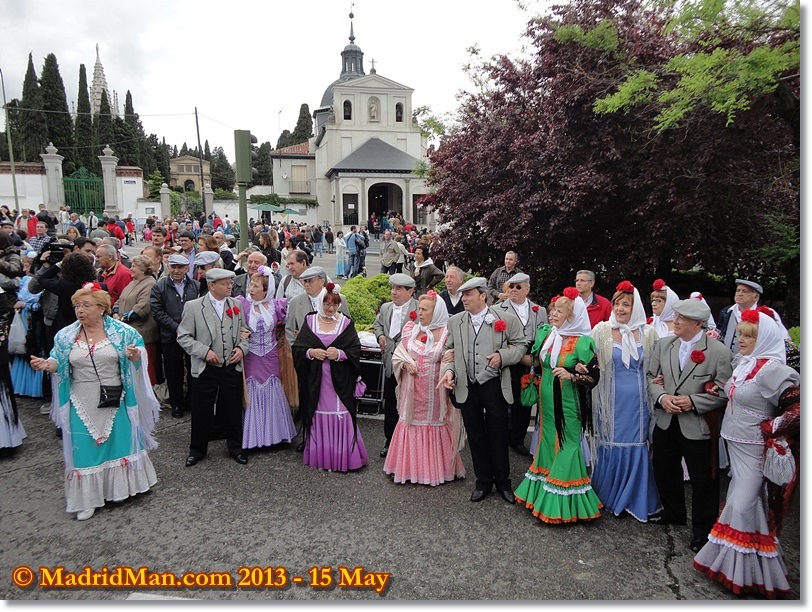
fiesta-de-san-isidro-mass-madrid-2009.JPGAfter passing all the "rosquilla" (las tontas y las listas, like hard-fried doughnuts) stands on the left and the paramedics and community group stands on the right, I had to wind around the backside of the catholic mass which was being given to the seated masses in the street. There must've been 10,000 people there, all seated and listening intently, most of the men left their chulapo hats on for protection from the sun, as did the women with their scarved-and-carnationed heads. A number of women also fanned themselves even though it was not cold - but as their costumes may have been heavy and the sun direct on the backs of their heads, I couldn't blame them.


fiesta-de-san-isidro-food-madrid-2009.JPG Passing the mass(es), I continued uphill seeing a few State-Fair-like game stands, but then it was just one terraza after another, covered and uncovered, bar after bar, all displaying piles of these incredible Spanish dishes like croquetas, calamares, salmonetes, fried potatoes, chopitos, and one humongous paella pan after another, all with freshly garnished shellfish and lemon wedges. There was even one Kebap stand - which didn't have anyone waiting at it at the time of my passing. Since it was still relatively early, there weren't many eaters but I could imagine how full those terrazas would be the minute the mass was concluded at around 1pm or so.

On my way up the hill, and subsequently on my way back down the hill, I passed one cutie-pie girl after another, tiny things, maybe 5-8 years old, dressed up by their mothers as "chulapas" (traditional Madrid dress) with tiny red polka dots, oftentimes a white shawl around her shoulders, and always a white scarf covering her heads, topped off with a single red carnation. They were adorable, you just wanted to give them a big hug. The little boys, dressed alternatively as "chulapos", were cute too but not as cute with their black pants and black shoes, white button-down shirts, and a hounds tooth, button front vest, topped off with their gray hats.

Returning to the bottom portion of the road passing through the Pradera de San Isidro, I stopped off near the Ermita de San Isidro to buy some delicious Rosquillas: Las Tontas y Las Listas. Rosquillas are like a harder fried-dough version of a doughnut, topped with a variety of icings. They're great with coffee for breakfast or merienda. I only bought a dozen. But since rosquillas are only sold around the San Isidro holiday, by the time the last rosquilla is eaten is when we realize we have to wait until next year before we can buy more.

fiesta-de-san-isidro-chulapas-chulapos-madrid-2009.JPGWith the two-handle plastic bag containing rosquillas now wrapped around my wrist, I turned around to see a group of 20 older Chulapos y Chulapas dancing El Chotis, perfectly choreographed to recorded music, and a large group surrounding them, everyone taking photos and video - including me (see below!). These dancers belong to "Peñas" or associations, each having its own banner/flag to represent them. They practice every year to perform for the Fiestas de San Isidro and, I suppose, whomever else will have them. They don't get paid, I'm sure, but do it for the love of the dance, the love of their city and its history. Sadly, however, the members of these associations are always older. Rarely does a young person join the ranks as "it's for old folks" and, I'm sure, "it isn't cool". So I have to wonder WHO will be dancing El Chotis on San Isidro in 25 years time when ALL these people have passed away. "That's progress"??


MY VIDEO: "Chulapas" & "Chulapos" dancing "El Chotis", traditional Madrid dance

So I'm officially done with the San Isidro Holiday although events take place throughout the weekend in various locations around Madrid, including the Pradera de San Isidro. Tonight and tomorrow night, from my window, I'll hear loud rock concerts until late. And then, on Sunday evening, marking the end of the San Isidro Holiday, there will be an incredible fireworks display in the Pradera.. And from my rooftop I'll have the best view in the area, being only a half a kilometer away. Can't wait for that.
 
15 May in Madrid is Madrid's Patron Saint Day, la Fiesta de San Isidro. It's the day when Madrileños, both natives and transplants, show their pride and spirit for Madrid, Spain.

And they show their pride in many ways but the biggest way to celebrate is to organize a huge festival. During the weekend of San Isidro there is MUCH going on. Not only are there parades through downtown Madrid with music, dancing, older folks and children dressed as chulapos and chulapas (traditional Madrid costume), but there's also a huge gathering at the Pradera de San Isidro, around the Ermita de San Isidro, located just across the Manzanares river from the Vicente Calderon Atletico de Madrid football stadium. In the Pradera there are concerts, stands selling las rosquillas del santo (a kind of pastry/cookie), food stands and terrazas, traditional dance displays, more costumes, a Catholic mass, and free distribution of the clear, cool spring water from below the Ermita which, it is said, has healing powers.


For other, more bloody entertainment, there's the month long bullfight festival, the la Feria de San Isidro in the Corrida de Toros de Las Ventas Madrid. There, bullfights of varying levels take place nearly every day and tickets are at a premium, almost impossible to find as nearly every bullfight is totally sold out long before it takes place. And don't be fooled, this is a festival FOR SPANIARDS. Why? Mainly because it's a Madrid festival and many MANY Madrileños have "abonos" for the entire bullfight festival, renewing them year after year, sometimes for thousands of Euros - depending on the quality of the seat location. Also, attending a San Isidro bullfight is a kind of Status Symbol, to see and be seen as one of Madrid's elite class since tickets are expensive and difficult to get. They go very well dressed in their best suits and dresses, made up and hair slicked back.

Not to be left out - and not specifically related to San Isidro - is the month long Suma Flamenca flamenco festival in Madrid of which I'll attend my first flamenco performance on Monday and am looking forward to a dozen more flamenco performances during the festival.

After tomorrow, I'll post some photos - and maybe some video - of the things I saw while at the Feria de San Isidro.

Read the EsMadrid.com website page for a detailed agenda on San Isidro activities (only in Spanish, sorry!).
Read about the Ermita de San Isidro (only in Spanish, sorry!).

Read and see photos from the May 15, 2008 San Isidro Festival blog entry and also from the May 13, 2008 San Isidro Festival blog entry..
 
el-clasico-real-madrid-barca.jpgIt's time once again for "El Clásico", the 2nd seasonal match-up between Spanish football heavyweights Real Madrid & FC Barcelona (a.k.a. "Barça"). This time around it takes place tomorrow night/Saturday at 8pm at the Santiago Bernabeu Stadium (see webcam) on Madrid's Paseo de la Castellana. The game often decides the fate of one team or the other's in the Liga Española, Spanish Primera Division, Champions League, or "other" league.

Tomorrow night's 8pm game will be shown ONLY on Pay-Per-View for 12 Euros whereas their first meeting was on non-Pay-Per-View, but now I don't recall if it was simply on cable TV (Canal+) or on public/free TV. It was one or the other, but it was not Pay-Per-View, that's for sure, because I watched it and have an aversion towards PPV events. It's not so much that I'm cheap but I'm not passionate enough about any event to pay to see it on TV. If I'm going to pay, I'll go see it live and in person. I've always believed that Pay Per View events were a dangerous marketing route. Sure, it makes a lot more money but you also tend to alienate the majority of your fan base. Look what happened to boxing's title fights on PPV, now almost no one watches anymore, no one talks about boxing anymore, and no one really cares, either. PPV will be the demise of boxing. The same could happen to football/soccer with only a small percentage willing to fork-up the cash to watch their favorite teams, opting instead to read about it in the newspaper the next day or just listening for free on the radio - or they might just stop caring about soccer altogether. That'd be a huge blow to merchandising!

Tickets are sold out for the game to no surprise to anyone. Recent headlines are stating that re-sellers are getting up to 500 Euros per ticket - for which they paid 225 Euros. And if Real Madrid wins you can be sure to hear car horns and shouting fans in the street until the wee hours of the morning. Watch for closed traffic at the Plaza de Cibeles fountain (see webcam), where the team and its fans often celebrates its biggest victories.

One can listen (in Spanish) for FREE to online broadcasts from outside of Spain or via regular radio for residents on the peninsula. Surely many people will be gathering in their favorite bars which choose to PPV the event - and therefore sell LOTS of beer and snacks.

There exist a few not-so covert ways to actually watch the football game online with fair-to-poor video quality. I've watched a few sporting events like this in the past but sometimes the poor quality can be off-putting to the point that it's not watchable.

Find links to WATCH & LISTEN to the Real Madrid vs. Barcelona football match on the MadridMan's Madrid Radio, TV, Music, & Movies page.

Not sure who to cheer for, myself. I never claimed to be a true fútbol/soccer fan, much preferring the other style of football where helmets are worn and hands can be used for fingertip catches in the endzone. Still, it's fun to watch the entire country get jazzed-up for Spain's greatest rivalry.

RESULT: Barça beats Real Madrid 6-2.

barcelona-6-real-madrid-2-mayo-2009.jpg
 
2009-suma-flamenco-madrid-flamenco-festival.jpeg
It's that wonderful time again in Madrid, time for the 2009 Suma Flamenca - the month long Madrid Flamenco Festival featuring some of flamenco's best artists; singers, dancers, and guitar playing. This year will be my 3rd round of the 4 years of the flamenco festival's existence.

Last week I attended the press conference for the 4th Annual Flamenco Festival of the Comunidad de Madrid in the Teatros del Canal (Calle Cea Bermúdez, 1, metro Canal, Paseo de la Castellana near the Plaza de Castilla). First, the large building, Teatros del Canal, is brand new, ultra modern, glass and steel, and lacks any character. But since the newly built theater venue is owned by the Madrid City Government they've got to put it to good use.

2009-suma-flamenca-convocatoria-3.JPG
The press conference was the 3rd I'd attended. The previous two conferences took place in the beautiful old brick El Aguilá Beer Factory. This building had been totally renovated inside, but no matter. The new Teatros del Canal is what we're given this year for the site of the press conference and a number of the flamenco performances for this year's Flamenco Festival.

2009-suma-flamenca-convocatoria-2.JPGSantiago Fisas, Juan Verdú, and even singer Paco del Pozo & dancer Roció Molina sat on the panel to discuss this year's flamenco festival and all that entailed. Apart from discussion about the performers and venues, much attention was given to "La Crisis" and how it will affect this year's flamenco festival in Madrid. At the end of the press conference, there was a short performance given by singer Paco del Pozo and dancer Juan de Juan which was quite entertaining (photo at right).

The 2007 & 2008 Suma Flamenco press conferences ended with a huge, catered affair with more performances, television interviews of the stars, and lots of FREE wine, beer, before-your-eyes-poured sidra, before-your-eyes-cut jamón serrano, even hot cocido madrileño served in tiny terracotta bowls. ALL kinds of food and drinks were served by shirt-and-tie servers, all waiting on you hand-and-foot. Plus free Suma Flamenco T-Shirts! After this year's press conference, we were sent off with a smile and a "Thanks for coming!" That's the economic crisis for you. Mind you, I'm not complaining, the expenses for previous-year's press conferences were exaggerated - but welcomed, nonetheless.

We were told there would be more venues used this year and about as many performances as last year. Take a look at the Suma Flamenca website for the schedule, venues, and performances. Overall, in comparison to previous years, I'd say the line-up looks pretty good. Some of the performers I'd seen last year in downtown Madrid are performing in the other cities and villages of the Comunidad de Madrid and not in the city. And since I have no car - and don't drive in Spain - I won't be attending any not reachable via metro. I'd hoped to see singer María de Toledo and dancer Belén López once again. They're impressive. But I'm sure I'll be impressed by some of the newer (new to me) performers and venues.

Sadly, since La Comunidad de Madrid closed down the Teatro Albéniz last year - converting it to flats - I'll miss this centrally located theater. Also on the DOWN-side, many of the performances take place on the far-north venue of Teatros del Canal, about 45 minutes away by metro for me. On the UP-side, the Teatro Häagen-Dazs Calderón de Madrid (downtown, next to the Cine Idea on the Plaza Jacinto Benavente) and Teatro Lara will be a nice change, I'm sure.

So if you have the chance, attend some of the 2009 Suma Flamenca performances from 7 May to 20 June (although their logo above incorrectly shows the ending date to 15 June)  throughout the Comunidad de Madrid - as well as IN the City of Madrid. The vast majority of performances are those of flamenco singing but there are a handful of flamenco dancing performances to enjoy as well. Tickets are pretty reasonably priced and you can't get a more Spanish experience. In fact, the vast majority of those attending these performances ARE SPANISH! I saw very few non-Spaniards at the previous years performances, and you even see some Spanish celebrities in attendance. This year, I hope to attend 10-15 flamenco performances. Can't wait!!

2009-suma-flamenca-convocatoria.jpg
 
People often ask me which is the best way to travel around Spain for the visitor. Answering this question is always difficult because "the best way" means different things to different people and many details must be considered before deciding.

Below, I'll detail the pros and cons of each form of travel. Please feel free to add your own comments to this travel blog posting.

Spain Bus Travel:
pros: by far the cheapest form of travel in Spain, the bus line network is vast, buses are comfortable and modern, many long-distance routes show movies (in Spanish) and have recorded music channels like on airplanes, you can carry-on practically anything, sometimes good highway views through large windows, comfortable & spacious seats, sometimes buses travel as fast as trains, bus stations are usually in or very near the downtown, sometimes a more expensive "Express Bus" is available along some routes which makes fewer or no stops.

cons: buses don't go everywhere or one must change buses at major city hubs, tiny toilet - if any, morning/afternoon sun can be annoying, sometimes inadequate air conditioning, sometimes nasty bus stations, low-security in bus stations and bathrooms, always complaints about luggage theft, sometimes buses travel slower than trains - particularly slower than high-speed AVE trains.

Spain Train Travel:
pros: the most comfortable method of travel, wide & long seats, many and large bathrooms, great views of the countryside, fast travel on the AVE trains, lots of luggage space, faster lines at train stations, train stations are generally located within the cities, long-range trains usually show movies (in Spanish) and have music jacks and free headphones, the cafe/bar car.

cons: expensive, trains may not go where buses will, the possibility of getting a rear-facing seat.

Spain Airplane Travel:
pros: fast point-to-point travel, can be cheap with low-cost airlines like Easyjet, RyanAir, and even Iberia if you get very lucky, best when going from coast to coast or extra long distances.

cons: traveling from/to the city to/from the airport in the outskirts can take time and traffic jams are always a possibility, can be very expensive if tickets are bought without anticipation, waiting in check-in or security lines can take a long time, carry-on restrictions of liquids and other items, no view from airplane windows, narrow seats, no movie.

Next week I'm making my fourth visit to the city of Granada, Spain. This time, for the first time, I'm going by bus but have taken the train the two previous visits and have gone by car once. To give an example, I'm paying 31 Euros for a round-trip bus ticket from Madrid to Granada. The train would have cost about 130 Euros. That's a 100 Euro difference! And the trip takes about the same amount of time; 5 hours. My only concern about taking the bus for the first time is the fact that one cannot stretch their legs like on a train, plus the toilet is roughly the size of a small broom-closet - and you NEVER see anyone using it. There must be a reason why.

I've only traveled Spain by bus a couple of times and, generally speaking, I don't care for bus travel ONLY because of the lack of mobility and the issue of the toilet on long-distance trips. But this time around, considering the cost difference, I'm going to try it and will report my experience later.

How do YOU prefer to travel around Spain and why?

 
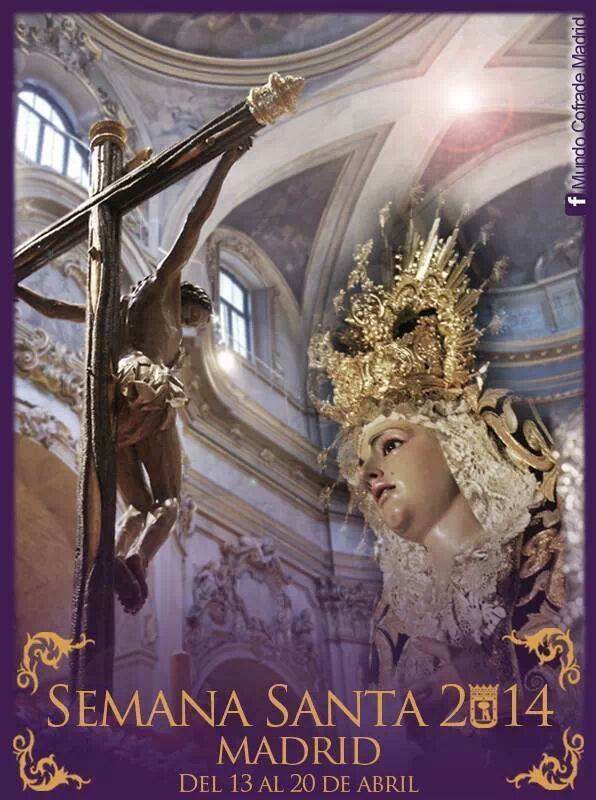
Holy Week, or "Semana Santa", in Madrid is more than just watching one procession after another through the streets of Spain's capital. It's truly special - if you can get close enough to admire it. I've already watched the Domingo de Ramos procession last Sunday evening and expect to watch more today/Wednesday/Miercoles Santo, as well as tomorrow's Jueves Santo, then Friday's Viernes Santo, and Saturday's Sábado Santo. There are no processions on Easter Sunday, somewhat surprisingly to me.

The few Spaniards whom choose to stay home for Holy Week and not travel to Andalucia, to "el pueblo", or to travel abroad have a special treat. Not only do they get an eyeful of Spanish religion at its pinnacle but they also enjoy shorter lines at Madrid restaurants, more parking spaces, less traffic, and generally a quieter Madrid.

Semana Santa processions are beautiful and popular among the remaining Spaniards and a few tourists whom are aware of them. Many of these "floats" are some hundreds of years old, made anew each year with special polishing and care, new flowers bought and expertly arranged around the effigies of Virgins and Christs.

These effigies typically sit upon a kind of platform surrounded by flowers and candles, carried on the backs of the faithful whom are usually the sons of those whom had carried the same platform for the previous generation. It's considered a great honor to bear the wait of the several-thousand-pound platforms.

I've seen several processions in Madrid but this city is not known for them - although they are nice. Those in nearby Toledo are particularly pretty. And, of course, those in Sevilla are the best in all of Spain.

torrijas-de-semana-santa.jpgNot only does Madrid - and Spain - have wonderful processions, but they also have TORRIJAS! Torrijas are the typical dessert/breakfast/merienda of Semana Santa-Holy Week. Torrijas are generally made by adding slices of bread to milk, egg, lemon, cinnamon, sugar, then frying the bread. It's a complicated process and since I've never made them before I won't profess to know anything about their preparation but here you can find one recipe for torrijas in English. But I sure love to eat them every chance I get because they're generally only available during this Holy Week.

(torrijas are discussed, in Spanish, in this blogspot blog from Pozuelo, Cuenca, Spain)
 
domingo-de-ramos-procesion-madrid-2009.JPGI've just returned from watching Madrid's only Palm Sunday (called "Domingo de Ramos") procession of Easter/Holy Week, called Semana Santa in Spain.

navarenos-domingo-de-ramos-2009-madrid.jpgToday's procession was called "Procesión del Cristo de la Fe y del Perdón" and was a somewhat simple procession with an 18th Century Christ on a Cross sculpture, led by pointy-hooded navarenos.

The Palm Sunday procession started at 7:30pm at the beautiful Basílica Pontificia de San Miguel on Calle San Justo, 4. It was here where the Christ effigy exited the basilica and headed slowly uphill through the crowded Plaza de la Villa (Madrid's one-time City Hall), where I first took up position at the top of the slight incline near the Calle Mayor for a better vantage point.

After the procession crossed Calle Mayor it headed for Plaza de Santiago where I was once again waiting for its arrival. The procession moves so slowly that it's relatively easy to get a head of it.

It was from here at the Plaza de Santiago that I made my way home. It was already nearly dark and I'd already taken nearly 100 photos and had to get home. It was a beautiful late afternoon for a procession; skies were clear and I was comfortable in just my short-sleeved shirt.

Today's Palm Sunday procession was the first of several Holy Week processions in Madrid. More processions take place in Madrid on Holy Wednesday (2 processions), Holy Thursda
y (5 processions), Holy Friday (8 processions), and the last processions taking place on Holy Saturday (2 processions). There are no Semana Santa processions on Easter Sunday. There are an amazing 18 processions in Madrid for this year's Holy Week.

See http://www.esmadrid.com/semanasanta/procesion.html for Madrid's Holy Week processions, procession routes, and other details. Unfortunately, this page is only available in Spanish.
 
Madrid.com, a NEW website in direct competition to MadridMan.com, is surprisingly NOT owned by the city of Madrid - or even the Comunidad de Madrid. It's not even owned by a Spanish company. It's owned, in fact, by Barcelona.com, Inc., a (one-time??) Maryland, USA-based company which ALSO owns Barcelona.com. The two websites even look similarly. The original registrants of Barcelona.com and founders of Barcelona.com, Inc. are/were both Catalán-Spanish citizens.

In 2003, Barcelona.com, Inc. successfully appealed a 2000 WIPO decision (WIPO: "World Intellectual Property Organization Arbitration and Mediation Center") to transfer the domain name to the city of Barcelona, Spain and retained the domain name after the 3-year dispute.

It would seem that Barcelona.com, Inc. has become emboldened, successfully purchasing Madrid.com from Mail.com, a Free Email service which bought and warehoused hundreds of recognizable country, city, and other .com names for use of *.com email addresses. Mail.com owns USA.com, Europe.com, Berlin.com, & Tokyo.com to name only a few. For years, I've had an email address using the *.madrid.com domain name. In fact, I see it STILL WORKS - for the time being!

Madrid.com has only been online for a few months, has only a Google PageRank 3, and has a very poor Alexa Traffic Ranking due to its "newness". If you conduct a Google search using the following syntax, link:madrid.com, you'll find the ONLY links to it come from other Barcelona.com, Inc. owned websites including Barcelona.com, Asia.com, & India.com, and none from other outside sources. This tells me that almost no one else knows about it yet. Expect a huge marketing campaign coming soon, however. They didn't go to all the effort and expense to acquire the domain name for nothing!

Simply owning Madrid.com does not ensure success on the internet - but it certainly helps. It's still totally new and they need to get the word out that Madrid.com even exists as a Madrid Travel Portal. That costs money in advertising. Money, I'm sure, they have.

So why am I, MadridMan.com, HELPING Madrid.com with free advertising? Good question. I don't mean to promote them. I mention it mainly because RIGHT NOW - and so far - MadridMan.com ranks higher than Madrid.com in every way - and MadridMan.com has better advertising rates too! (the Barcelona.com advertising rates are sky-high!). The story about Madrid.com's existence is news-worthy. You've got to admire the lofty goals of some companies - and people. To achieve such seemingly impossible goals is truly inspiring - as long as no one gets hurt along the way, of course.

But I can imagine the day when Madrid.com may become Madrid's Main Travel portal just as Barcelona.com has become for Barcelona. Owning any city's dot-com domain name is a powerful tool; it's simple, short, and descriptive. Big travel corporations like Barcelona.com, Inc. have a lot of power, money, and influence.

Barcelona.com, Inc. is likely to be comforted that in 2002, the city of Madrid LOST a WIPO decision to the email warehousing company ("Easylink Services Corporation") for the proper ownership of the Madrid.com domain name. But should the Madrid City Government or Madrid Regional Government grow new teeth and make a better case for themselves, Barcelona.com, Inc. will likely be ready for the challenge. The 2002 WIPO decision for Madrid.com and the 2003 appeal to retain Barcelona.com sets strong precedents and carries a lot of defense ammunition should the region or city of Madrid attempt such a takeover attempt again. They, the Comunidad de Madrid, should be happy they DO OWN the Spain-based domain name (with .es extension) Madrid.es and leave it at that.
 
That's right! I've been criticized for enjoying flamenco music! And criticized by Spaniards, no less!! Is there anything MORE "Spanish" than Flamenco Music??

All those years living in Ohio, USA, I was listening to flamenco music almost daily, allowing its guitar and vocal sounds to virtually "take me away" to the country I pined for so desperately. Flamenco was part of my "assimilation" process. And now that I live in Spain I actually get criticized for listening to flamenco radio stations like RadiOlé! Can you beat that??!

Generations of Spaniards have been listening to flamenco music on the radio, I suppose, because there was little else broadcast. Now we have more choices, of course. So why would an American living in Spain choose to listen to flamenco music on the radio? Because I like it!!'

Now I feel like if I'm not listening to Spanish or English pop music that I'm "cutre" or "old fashioned". I've been called "cutre" many many times by Spaniards for choosing to listen to RadiOlé and it always ruffles my feathers. It's as if I should be listening to the Rolling Stones or Elton John or whatever.

Is it that Spaniards are shunning their heritage because it's not cool? There must be enough of a following for flamenco music because radio stations like "Radio Olé" are alive and well. I can't believe that ONLY the gypsy population is the only group of people listening but maybe so. According to some, only gypsies, tourists, and old Spanish women listen to flamenco. Maybe that's true but today's standards. I don't know. I'm inclined to take an opinion poll in the Puerta del Sol and ONLY poll Spaniards - if I could get more than a dozen of them per hour in SOL, that is. Surely I could.

The population in any given Suma Flamenca flamenco festival (every May) performance is, without a doubt, 95+% Spanish in attendance. Is it because it's art-and-theater and not intended for tourists? Not sure. So it would seem that flamenco performances, at least, are enjoyed by Spaniards. But why if these same people don't listen to flamenco on the radio or on CD in their homes?

I enjoy Spanish pop like Amaral, Chambao, Ismael Serrano, Jarabe de Palo and the like. But when I'm working or doing the dishes I like listening to flamenco music. Why? I guess because it seems so soulful, so ancient, so down-to-the-roots Spanish music.

Do YOU, a non-Spaniard, enjoy Flamenco Music? Or if you are a Spaniard, why - or why not do you enjoy flamenco music?
 
It never ceases to amaze me the things we happen to find on the internet.

Just now, I was searching "back-links" to MadridMan.com and happened upon the following July 18, 2003 Blogger blog entry about MadridMan.com. It's interesting to read what others have written about MadridMan and MadridMan.com from, what, nearly 6 years ago now:

Friday, July 18, 2003

There isn't much going on in my mind tonight. It was a rough work week. My rent is going up. My life seems dry. Even the dog acts like she's bored with me. Apparently, I need a long vacation.

The one place I really want to visit, and that I haven't yet visited, is Madrid. Sometimes, when I get in moods like the one I'm in now, I head over to MadridMan's Yankee Home Page and think about actually going. I've been visiting MadridMan's site for years, longer than I've been (regularly) visiting just about any other site. He lives in Columbus, Ohio (he loves those Buckeyes), and he's about my age. His interest in Madrid seems to be a big part of his identity. Naturally enough, he started a site that has gradually become downright comprehensive. There are links to Spanish radio and TV stations, photos from his several trips to Spain, message boards for those planning their own trips, links to Spanish news sources, and on and on and on.

MadridMan also has a webcam at his desk. I don't know why I find it so compelling, but I do. Tonight, for instance, as I write this, MadridMad is sitting at his desk, in what is now his familiar living room, working away. He's shirtless, as he often is, and he seems pretty content. I don't know what the webcam has to do, really, with providing information about Madrid, but it makes me feel like I know him just a little bit. Somehow, it makes him seem all the more trustworthy. And--on a night, like tonight, when the world seems a bit awry--it's comforting to know that MadridMan is there.

Should I plan a winter trip to Madrid?

posted by Jimmy  # 11:50 PM

The above is an interesting account of what a "normal visitor" sees at MadridMan.com. The MadridMan Live Cam has been online for more than 11 years. Wow, that's a long time. Here are a few of the funniest webcam photos "caught on camera" - I'm not including the naked and near-naked photos of which I DO HAVE SAVED but will never show again in any public forum. Hahahaa... Note the dates of these Live WebCam photos:

madridman1.jpg cascajares.jpg
MMxmascards.jpg 2MADRIDplate.jpg
punocoat1.jpg Mmm41802.jpg
madrid03trip.jpg guitar9-25-04a.jpg
11202004OSUvUM.jpg 10-07-2005toMadrid.jpg
1020-07osu-goodluck.jpg 2009-5-march-madridman.jpg
 
Oscar-Penelope-Cruz-2009.jpgLast night, 22 February 2009, Alcobendas-Madrid-born Penélope Cruz won the Academy Award for the Best Supporting Actress for her role as "María Elena" in the 2008 Woody Allen film, "Vicky Cristina Barcelona". It's a proud day for Spain, Spaniards, Spanish actors, and those from Madrid and Alcobendas.

During her acceptance speech, "Pe" thanked Woody Allen, Pedro Almodóvar, Bigas Luna & Fernando Trueba for giving her her first two movies. She dedicated the Oscar statue to her parents, brother & sister, and everyone who helped her since the beginning.

Especially touching was her emotional story about how she grew up in Alcobendas (a suburb of Madrid) where winning an Oscar was not a very realistic dream. She said she would always stay up to watch the Academy Awards and always felt the ceremony was a moment of unity for the world, "Because art, in any form, is an has been and will always be our universal language. And we should do all we can to protect its survival."

At the end, the 34-year old actress said in Spanish that she dedicated the award to all Spaniards and Spanish actors sharing this moment with her.

Congratulations,